Project Details
Tools: Adobe Illustrator, Adobe Photoshop, Canva (moodboards), research methods, Pinterest
Timeline: One semester
Project Type: School project/ client work
Timeline: One semester
Project Type: School project/ client work
Key Skills
- Skill 1: Brand Identity Design
- Skill 2: Research-Driven Design
- Skill 3: Client Collaboration
The Challenge
The problem:
In this course, we worked with a real client, Hotel Clemente, a luxury hotel being built in San Clemente, California. Our goal was to develop a brand identity that would help position the hotel in the Southern California boutique hotel market.
In this course, we worked with a real client, Hotel Clemente, a luxury hotel being built in San Clemente, California. Our goal was to develop a brand identity that would help position the hotel in the Southern California boutique hotel market.
The objective of the project:
To create a brand that connects emotionally with guests while reflecting the culture, history, and atmosphere of San Clemente.
To create a brand that connects emotionally with guests while reflecting the culture, history, and atmosphere of San Clemente.
The constraints:
- Emphasize sustainability and local culture
- Communicate luxury while remaining approachable
- Avoid obvious visual clichés like surfboards
- Create a complete and cohesive brand system
- Emphasize sustainability and local culture
- Communicate luxury while remaining approachable
- Avoid obvious visual clichés like surfboards
- Create a complete and cohesive brand system
Research & Inspiration
We began by meeting with the client to better understand their vision and expectations for the hotel.
After that, my group conducted research on:
- The history and culture of San Clemente
- The target audience for the hotel
- Competing boutique hotels in Southern California
- The history and culture of San Clemente
- The target audience for the hotel
- Competing boutique hotels in Southern California
From this research, we identified key insights that helped shape the brand direction.
I also created multiple moodboards exploring the visual tone of the brand, focusing on:
- A refined but coastal aesthetic
- Colors inspired by the local environment
- A luxury feel that still felt authentic and welcoming
- A refined but coastal aesthetic
- Colors inspired by the local environment
- A luxury feel that still felt authentic and welcoming
These moodboards helped define the overall creative direction.
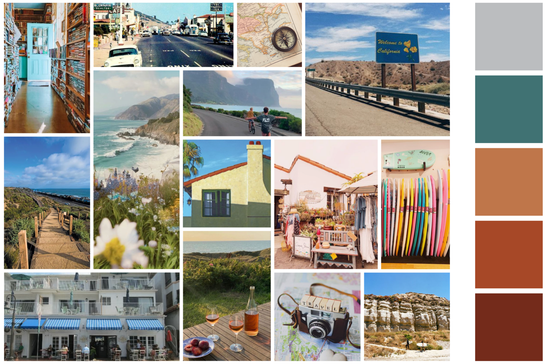
Initial Moodboard
Ideation & Early Concepts
After completing the strategy work, I began brainstorming and sketching potential logo concepts.
My process included:
- Writing a brand positioning statement
- Defining core values, personality, and tone of voice
- Sketching multiple logo directions
- Exploring new visual techniques and styles
- Writing a brand positioning statement
- Defining core values, personality, and tone of voice
- Sketching multiple logo directions
- Exploring new visual techniques and styles
I narrowed my ideas down to three concepts and began developing them digitally in Illustrator. From there, I refined two of the concepts further before selecting one final direction to build into a full brand package.
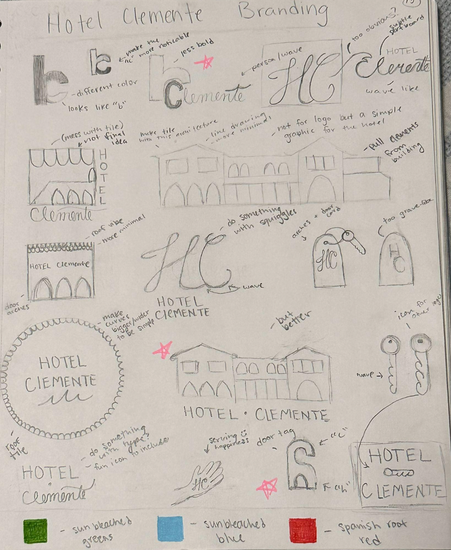
Initial Sketches
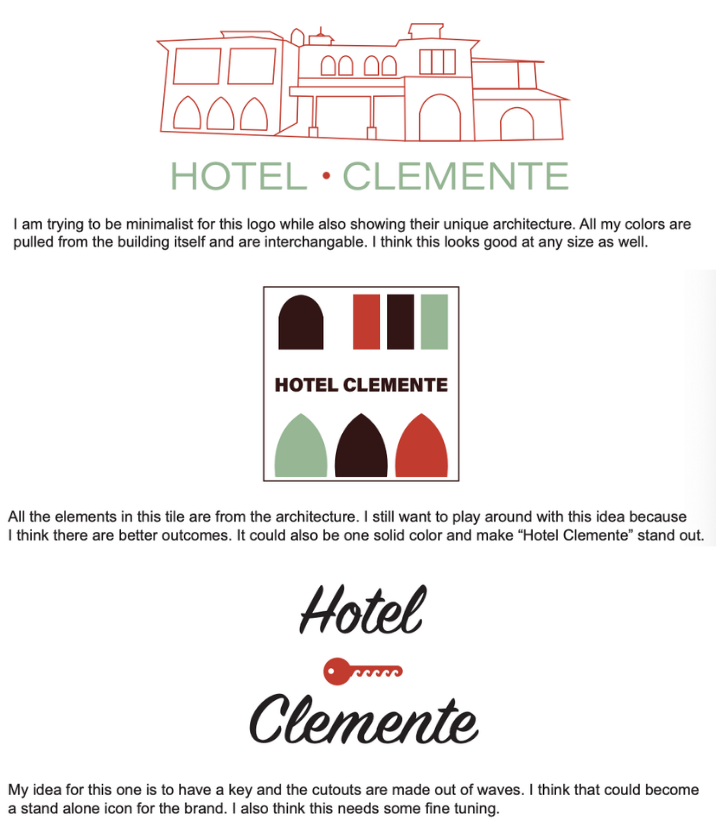
Top 3 Concepts
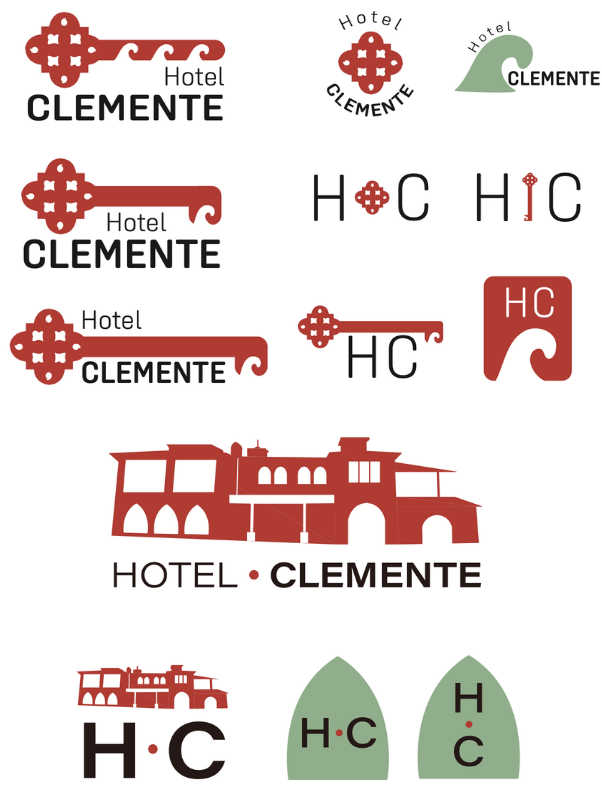
Top 2 Conceps
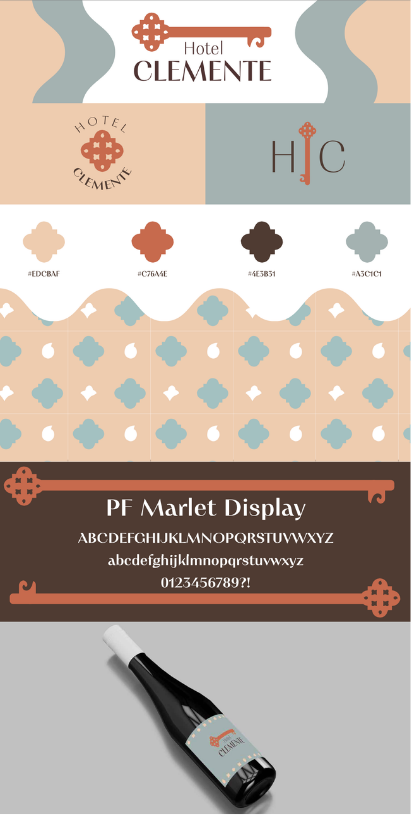
Logo Package Draft
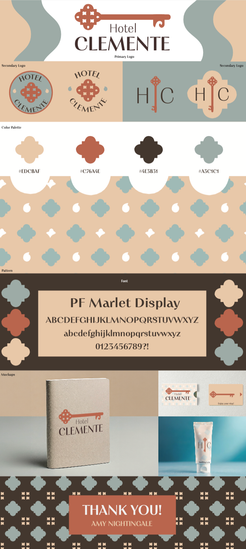
Final Logo Package
Design Process
I developed a full brand package that included:
- Primary and secondary logos
- A color palette inspired by the client’s vision
- Typography selections
- A custom pattern
- Mockups showing the brand in context
- Primary and secondary logos
- A color palette inspired by the client’s vision
- Typography selections
- A custom pattern
- Mockups showing the brand in context
After presenting the work, I refined the designs based on feedback.
Later in the semester, the client selected another concept from the class to move forward with. I was then chosen to join a smaller team to help expand that concept into the branding for the hotel’s rooftop restaurant, Loretta’s.
For this phase, I:
- Created a new moodboard with a beach-inspired, mermaid-influenced direction
- Developed another brand package aligned with the new concept
- Updated designs based on client feedback
- Helped consolidate a consistent color palette across the team
- Created a new moodboard with a beach-inspired, mermaid-influenced direction
- Developed another brand package aligned with the new concept
- Updated designs based on client feedback
- Helped consolidate a consistent color palette across the team
Within the larger group project, I was responsible for designing the pattern system for the final brand package.
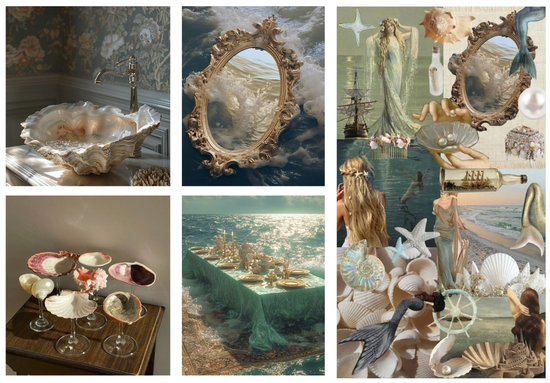
New mood board for Loretta's
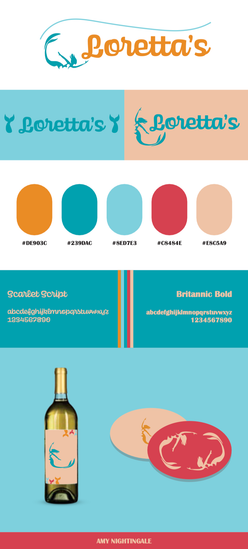
Brand Package
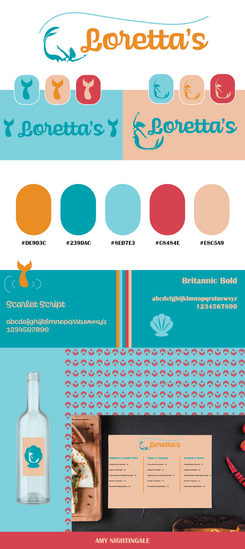
Improved Brand Package
Final Outcome
The final result was a comprehensive branding system developed for both the hotel and its rooftop restaurant concept.
This included:
- A refined visual identity system
- Supporting brand assets and patterns
- Mockups demonstrating how the brand could appear in real-world applications
- A refined visual identity system
- Supporting brand assets and patterns
- Mockups demonstrating how the brand could appear in real-world applications
The project successfully translated research and client input into a cohesive brand identity that reflects the personality and environment of the location.
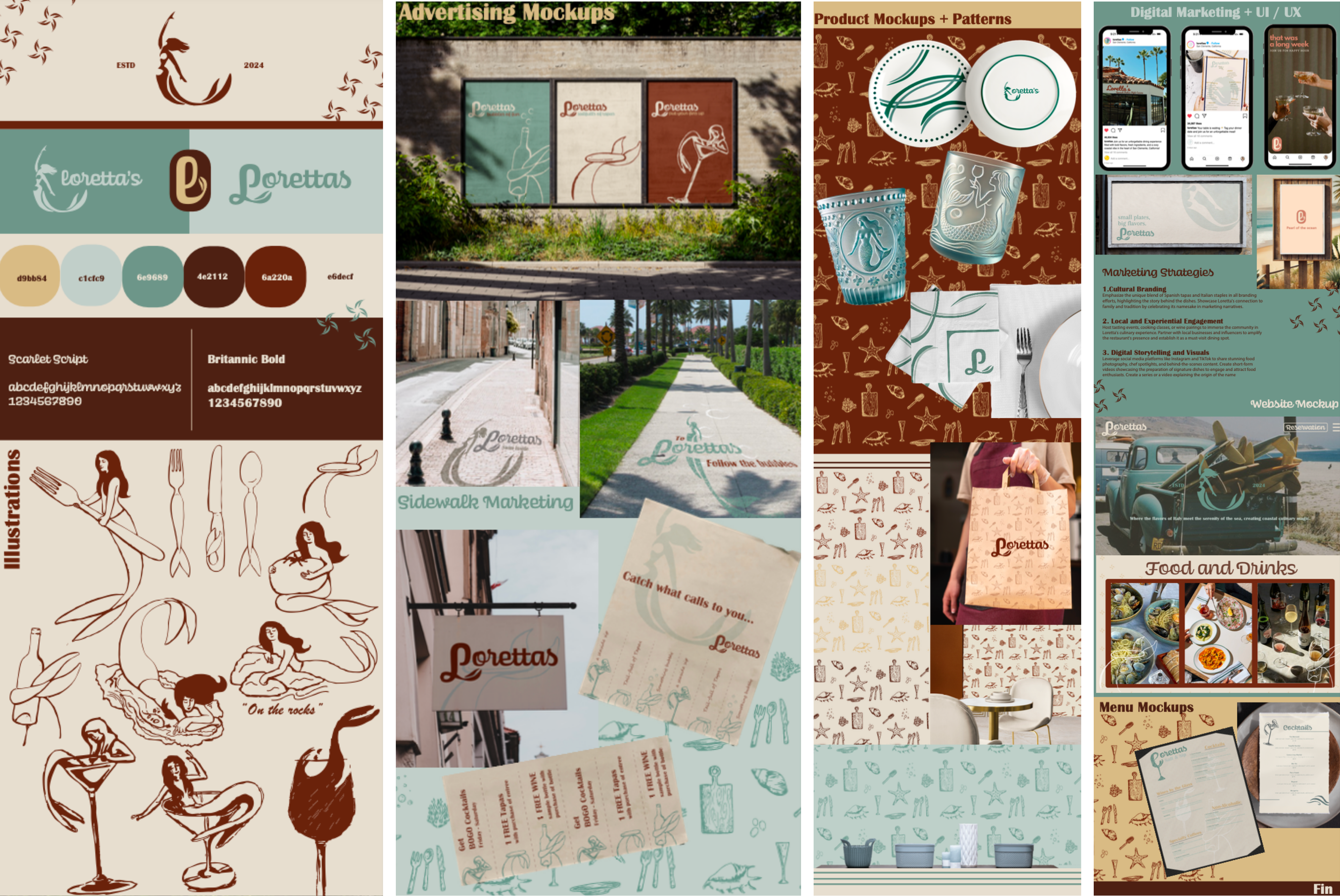
Full brand package
Reflection
This project taught me a lot about designing for a real client and balancing creative ideas with client needs.
I learned:
- How to translate research and strategy into a visual brand
- How to listen to client feedback and adapt designs accordingly
- How to collaborate within both small teams and larger group projects
- How to translate research and strategy into a visual brand
- How to listen to client feedback and adapt designs accordingly
- How to collaborate within both small teams and larger group projects
One of the biggest challenges was stepping back from my own design preferences and focusing on what best fit the client’s vision. Another challenge was creating mockups for the first time. I had to ask for help and research new techniques, which pushed me outside my comfort zone but helped me grow as a designer.
If I revisited this project, I would:
- Continue improving my mockup skills
- Explore more variations of the brand in real-world applications
- Further refine some of the visual elements within the brand system
- Continue improving my mockup skills
- Explore more variations of the brand in real-world applications
- Further refine some of the visual elements within the brand system